
Future-Proof your
Forever Home
with a work of art powered by air
A real life PVE installation video
Click below to watch


Airlevator – PVE 37
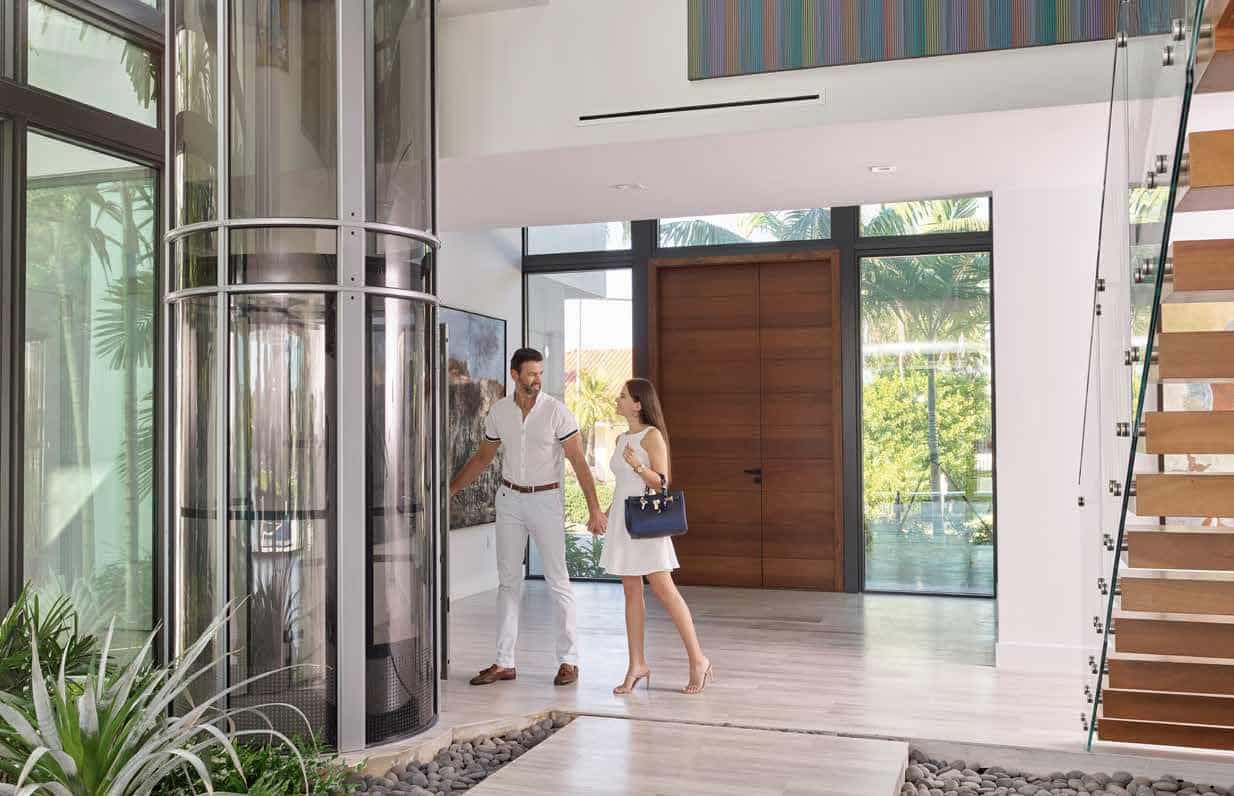
Airlevator Midi (PVE37), is the most popular unit in the range. With a footprint diameter of just 94cm, there is enough room for two persons, or one person using the optional fold down seat. Inside the cabin you have a little over 76cm of space during travel.
Airlevator – PVE 52
Airlevator Maximus (PVE 52), is the largest in the range. With a footprint diameter of just 132cm (large enough for a wheelchair) Inside the cabin you have a diameter of 112cm. When the door is open, there is a clear width of 81cm.

PVE – Cube Lift
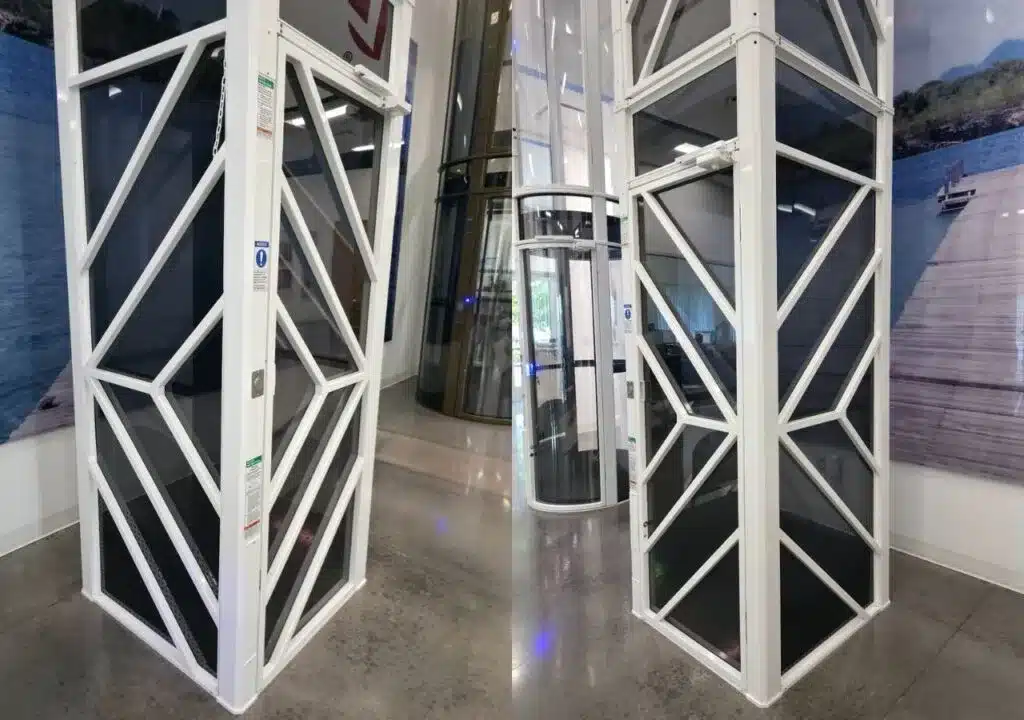
The Cube Lift carries up to 450 lbs (around 204 kg) and comfortably fits two passengers. Its compact 91.4 cm x 91.4 cm footprint makes it a smart choice for homes with limited space.
PVE – Cube Lift Diamond
The Cube Lift Diamond keeps the same compact 91.4 cm x 91.4 cm footprint and 450 lbs (around 204 kg) capacity for up to two passengers, but adds a striking exterior. The Diamond Package wraps the full shaft in uniquely crafted, diamond-shaped panels for 2 or 3 stops, turning The Cube into a statement feature in your home.

The Airlevator is manufactured by PVE (Pneumatic Vacuum Elevators) in Florida, USA.
Founded in 2002, in Miami, Florida, the PVE manufactures three versions of its vacuum elevator, a single, double and three-passenger/wheelchair-accessible model. Conventional lifts use cables or hydraulic pistons, PVE manufactures the only elevator that is powered by one of the most abundant resources in the world… AIR!
Due to its space-saving footprint, quick installation and unique panoramic design, the vacuum elevator goes where other elevators simply cannot. There have been 7,000+ units installed worldwide.
Only Lifts"The Quality of Service You Get from the ‘Big Boys’
with an Added Personal Touch"
Get Your Free Vacuum Lift Survey
Request a free survey and assessment from a Level 4-qualified Trusted Assessor to determine the right lift for you. You’ll receive a no-obligation quote based on not just your current needs but your future needs too.
– See the PVE Brochure –
Benefits of the Vacuum Elevator
Unique design
- Panoramic 360º vista – Light and airy, no enclosed feeling
- Self-supporting structure – Minimal building works
- Minimal space required – Ideal for new and existing homes due to its compact design
- No shaft, or machine room is needed*
- Installation directly on the existing floor – No Pit
- Absolute safety – State of the art safety features, electronically monitored, mechanically secure
- In case of a power failure, the cabin gently “floats” automatically to the lowest floor
*Some installations may prefer to have a separate motor housing or “split unit”
The only Elevator that Works with the Power of the Air
If you are thinking of installing an elevator in your home and have researched the different types of lifts, you know that this technology is unique within the lift industry.
The vacuum lift operates under the principles of pneumatics and vacuum, both different but related, which together result in pneumatic vacuum technology.
Pneumatic (Greek πνεῦμα “air”) is the technology that uses air as a mode of transmission, of energy, to move and function mechanisms, in our case the cabin of the vacuum lift.
Vacuum (Latin vacīvus) is described as a closed cavity where air pressure or other gases are less than atmospheric pressure.

Safety First
Is the PVE Elevator safe?
When considering a residential lift, one of the first questions asked is about safety. When imagining a home elevator, what typically comes to mind is the image of conventional lifts, with cables, pistons, grease, maintenance, etc…
The PVE Vacuum Elevator has special and unique car locks, which securely anchor the cabin on each level. They are composed of two steel levered hooks located on the top of the cabin.
During ascent, they remain closed, and once the cabin reaches the desired landing position, the car lock deploys and engages firmly into the guide columns of the lift structure. This design ensures a precise stopping position every time without creeping (in the case of Hydraulic systems) or misalignment with the floor (Rope stretch etc).
The cabin will remain in that position using zero energy until needed elsewhere. One of the unique aspects of the PVE vacuum lift is that before descending, the cabin goes up a few centimetres in order to release the locking mechanism before allowing the cabin to gently and freely descend.
In the event of a power failure, the PVE elevator always descends to the ground floor at a safe speed, literally floating to the ground on a cushion of air at which point the occupant is able to get out because the doors are released by mechanical means meaning they can only open when the lift is in the correct location.
Finally, the PVE vacuum lifts are CE marked and meet the legal requirements and technical safety features required of the Member States of the European Union.

What happens in the event of a vacuum loss?
The PVE vacuum elevator has mechanical safety brakes which come into action should the circumstance arise of the complete loss of vacuum above the top seal.
These mechanical safety brakes are activated within the first 5 cm of free fall if vacuum loss is detected, and the cabin immediately anchors to the columns of the structure at that point.
If vacuum loss and safety brake activation occurs, there are a few simple methods of rescue, as in a traditional elevator.
In the rare and unlikely loss of vacuum, the inherent design and mode of operation protect the passenger from any danger. The PVE vacuum lift is probably one of the safety lift designs in the world.


Commonly asked questions
Can an Altura home Lift take a wheelchair?
A pneumatic vacuum elevator (PVE) operates on air pressure differences to smoothly ascend and descend an elevator cabin, eliminating the need for cables and pistons. This innovation not only requires less space compared to traditional elevator systems but also stands out for its energy efficiency, as it foregoes the heavy machinery typically associated with elevator operation.
How fast does the PVE Elevator go?
Vacuum Elevators operate with a single push-button, functioning automatically to move up to at the maximum speed set for residential elevators, which is 0.15 meters per second.
Are PVE elevators safe?
The aesthetic allure of pneumatic vacuum elevators is readily apparent, yet their safety advantages are equally significant. Unlike mechanical elevators, which rely on an intricate system of locks, brakes, and releases to prevent freefalls or jams, vacuum elevators naturally avoid these risks due to their unique operating principle.